
The story is one line that both crowns walk from different ends. Light and Dark meet different people and fight on different ground, but they learn the same things in the same order. Nothing here lists a reward: the game keeps its surprises.
Before the story
One Spring fed the Najd, one Sultan ruled it, and the Burning One slept beneath. The night he woke, the spring split in two — sweet water ran east, fire ran west — the middle dried to desert, and the cold fled to the quiet edges of the world and stayed. The Sultan’s tear fell into the pit and became the Seal. Read The Sundering and The Two Crowns for the long version.
Chapter I — The Gift
A mentor of your class puts the worst weapon he owns into your hand and tells you to try it. Then you meet the wardens of your camp. “Rise, Sunblade,” says the gate-warden in Sun City; in Moon City it is “Rise, Moonblade.” The Tear flickered again last night and the whole camp felt it. You learn the first fact of the game: the Seal is weakening.
Chapter II — The Watch-Posts (levels 1–6)
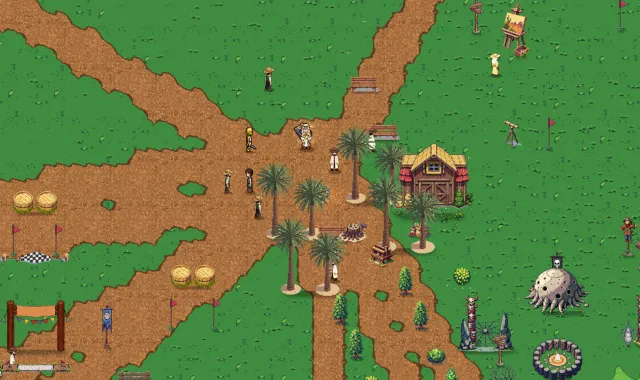
Four roads leave the two gates, and on them stand twenty-four places of your own side: orchards, water wheels, ash fields and lava falls, each with its own keeper and its own trouble. On the third place of each north road grows a Mother tree, and the one who helps her is given a blue pendant. At the causeway where the starter roads meet the middle road, the captain of Sun City or the pact-rider of Moon City sends you to the watch-posts that are bleeding — and the cult of the Chipped Crown shows itself for the first time. “Hold them, and Sun City holds,” says the one; “Mend them with steel,” says the other. The roads run on into the snow. You learn that the cult exists, that the neutral lands are unguarded, and that every road ends in white.

Chapter III — The Middle Road (levels 5–20)
Beyond the river or the lava the land flies no banner: “Out here, coin and courage are the only colours.” The neutral villages hire either crown. At level ten each harbour opens a ship to an island of your side, and the voyage ends with a camel of your own. Then come the palms or the spires, the salt flats or the dry mountains, the terraces of the snowline, and the frontier ring, where the scouts of both crowns are already working side by side. The chapter closes with a seat at the Truce.

Chapter IV — The Sultan’s Truce (levels 20–26)
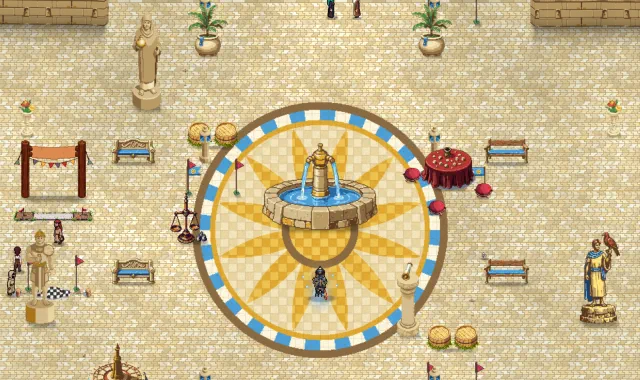
Around the Kahf the Tear’s light keeps the ground quiet. “Sit. Drink. The Truce has two rules. Inside the totems, no blood. Outside them, everything wants yours.” Abu Finjan pours tea for both crowns at one fire. Here you meet the well-keepers who log the nights the Tear flickers, the camp of the Bani Sahm, the star-reader of the Spring of Stillness — and you learn what the cult is doing: chiselling slivers off the Tear itself and selling them as sapphire that burns cold. Every shard sold is a crack in the cage. The Keeper of the Seal opens the gate to you at last: “The gate knows your tread now. Go down.”

Chapter V — The Wardens of the Deep (levels 20–30)
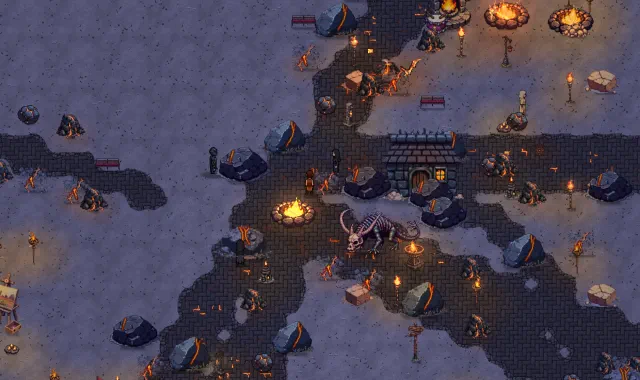
“You emptied a throne, and the deep breathed out. That grit on your skin? Ash.” Below the Kahf every descent is new and ends at a throne, and three Wardens take turns on it like watch shifts: a flame-tender whose hand is still burning, a steward-king the deep emptied and crowned, and the mother of the web-halls. The story sends you down four times, with the Truce’s own errands between the descents. The last is the one that makes the cups rattle on Abu Finjan’s table. When it is done: “The deep crown lies empty. For once, nothing climbs up to wear it.”


Epilogues
When a throne is emptied the ways below lose their shape and tear open into rifts, never the same twice: the delves of the Kahf, remade. And at level thirty the game tells you plainly: “Every road of the Najd knows you. The desert taught you all it knows. Now it will learn from you.”